

Be the Trustee of your Retirement!

Be the Trustee of your Retirement!

Starting a business after retirement is a growing trend. According to the National Bureau of Economic Research, about 25% of workers between 50-59 are self-employed. Of those ages 65-69, 46% are self-employed. And 68% of those between 75-79 are too. All of these groups have higher rates of self-employment than those under 50, where just 20% are self-employed.

Those who started a business from scratch represent only one group breaking into the business world after retirement. Franchises offer proven business concepts to help some entrepreneurs make money more quickly. Those who have retirement savings can often buy into one of these programs quickly. In fact, there’s been about a 40% increase in people over 55 buying into franchises since 2007.

Why are people starting a Franchise business:

  • Increased financial security – Most adults who decide to retire have significant savings. However, medical costs and other expenses can also increase. Continuing to work allows you to save more of those funds and continue earning interest for a longer period of time. You may even be able to open another retirement account at your new job or continue adding to your previous accounts for many more years to come.
  • Access to health benefits – If you are working a traditional job with benefits, you may get access to better health insurance than you would otherwise. This can help you get quality care and save money. Additionally, you normally can’t get access to Medicare until age 65. As a result, you may be stuck paying out of pocket without an employer plan which is quite expensive.
  • Ability to stay active – Working keeps both your mind and body active. Overall, this can improve both physical and mental health. You’re less likely to sit idle all day long and let muscles atrophy or gain excess weight. Thinking through complex problems can stave off serious issues like dementia. Additionally, some people simply enjoy working and spending time with co-workers. This can be especially beneficial for those who don’t have a ton of other activities or hobbies to look forward to.
  • Opportunity to try new things – Those who stayed in a single position or industry for their whole career may have other interests they want to pursue. A retirement job lets you explore different possibilities or focus on things you enjoy. This may be an especially potent benefit for those who start businesses. This gives you more control over your role and choice of industry. For example, if you previously worked in finance but wanted to do something creative, you might write and self-publish your own series of books.

Franchise topics:

  • Consulting
  • Child Care
  • Writing and Editing
  • Handmade Business
  • Dog Walking
  • Property Management
  • Bookkeeping
  • Catering
  • Handyman
  • Public Speaking

What Happens If You Work After Retirement?

If you work after retirement, you may be able to save more money in your 401(k) or other accounts so it continues to earn interest. However, your Social Security benefits may decrease if you earn more than the $45,350 limit up to your full retirement age.

You can start collecting Social Security benefits at age 62, but your benefits increase if you put them off until your full retirement age. This age depends on when you were born. The Social Security Administration offers a chart to help you determine your full retirement age and calculate benefits before that.

Basically, it’s up to each individual to weigh the pros and cons of retirement businesses or jobs based on their own situation. If you could benefit from preserving or adding to your retirement accounts for several more years, it’s likely worthwhile. If you care more about maximizing your benefits, a traditional job may not be worthwhile.

***To learn more about opportunities in retirement, please contact me at Joshco Partners for a free consultation.


Avoiding Small business failure!

Avoiding Small business failure!

“I think that maybe inside any business, there is someone slowly going crazy.”

Joseph Heller Something Happened

According to data from the U.S. Bureau of Labor Statistics, about 20% of U.S. small businesses fail within the first year. By the end of their fifth year, roughly 50% have faltered. After 10 years, only around a third of businesses have survived. Surprisingly, business failure rates are fairly consistent.

The most common reasons small businesses fail include a lack of capital or funding, retaining an inadequate management team, a faulty infrastructure or business model, and unsuccessful marketing initiatives.

BUT, if you wish to build a business and build wealth, Franchising can help alleviate most of what brings failure to an entrepreneur. Think about it, you’re buying into a proven business model, you have an understanding of the financial capability by reviewing existing operations, and you have a viable management team to work with you to build a business. With that said, due diligence must be completed to determine the strength and weakness of any Franchise organization. In a five-year study performed by franchise consulting firm FranNet, their results showed 92 percent of their franchise placements were still in business after two years, and 85 percent after five years. Though the success rate of independent businesses seems to be more volatile, this isn’t true for all industries.

If you are tired of working for Corporate America, and building wealth for someone else, there are several steps you must take to investigate Franchise opportunities. The list below is just a few of the items that one must look at before moving forward with a concept.

  • Does the model fit with your skill set
  • Success of existing Franchisees
  • The current management team
  • Service or Product fit with your community
  • Your expectations

There are many more items to check off prior to making a decision to buy into a Franchise model, so one must look for help if you do not have the time nor experience to complete the full due diligence. As most do with looking at real estate, making investment decisions, etc.etc.. Get yourself some help to evaluate what may be a great opportunity for you and your family.

To learn more about starting your own business through Franchising, contact me at Joshco Partners for a free consultation.
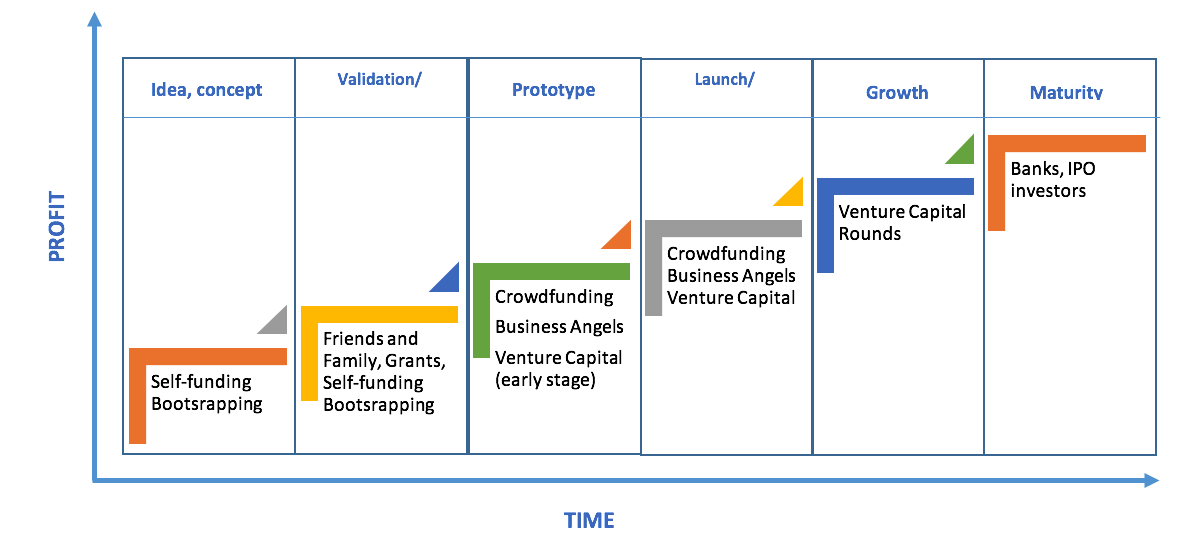
Growth Capital, Is it the right time for your organization?

The Cons and Pros of raising the capital

The opportunity to raise external money may be tempting; however, before entering this train, founders of a startup have to understand the cons and pros of raising the capital.

Let’s start with examples of the positive factors (Pros):

  • extra money will help you to speed up the journey and results of a startup;
  • high available budget can be used to develop and improve the quality of your product or service and thus to increase the chances of success;
  • very often investment comes with the influential people, contacts behind; you will definitely feel the positive impact of this as more doors will be open for you;
  • the journey of raising the capital (especially successfully doing this) will help to build your brand and benefits of being known and recognized in the business world.

The dark side (cons) of raising the capital:

  • the process will ask a lot of time and some money (everything costs);
  • investors’ money comes together with the loss of full control of the startup; you will have to compromise and sometimes it means detouring from your own plans;
  • you will have less of the startups’ profit as you will have to share it with the investors;
  • it might be difficult to feel the constant burden owing to others;
  • big money brings a danger of conflicts among the co-founders and sometimes this can lead to the termination of the relationships.

Why and when to look for the investments?

There are different stages of startup lifecycle, when company grows from the idea/concept stage through the launching and up to the maturity stage. All these stages require investments of a certain scale.

To learn more about Growth Capital, and the opportunities that exist, contact me at Joshco Partners for a free consultation.

Passive Franchise Owners Create Additional Revenue Streams

What is a Passive Franchise Owner – Passive Franchise ownership is the stage in business when, as the owner, you are no longer involved in the day-to-day operations unless you choose to be. The Franchisor has successfully developed systems that allow your people to run your business. When you reach operational irrelevance, you will have time to concentrate on the strategic side of your business. For many business owners, this is where the fun and profits happen.

Here are some reasons to consider Passive Franchise Ownership.

1. Your business will run smoothly.

The passive owner will have a successful Franchise system in place without your involvement. Your staff will know what to do and the systems in place will solve problems. Since you’re no longer in the trenches, you’ll rely on the Franchisors great financial reporting systems so you’ll always understand what’s going on and have an early warning when things could go wrong down the road. Your associates and customers will be happier because your business will be predictable in providing great service.

2. You will be able to concentrate on strategies instead of operations. Passive Franchise ownership by its definition means you spend less time on operations. Businesses that have achieved strategic excellence typically make more money and run more smoothly. This leaves you more time and brain power to focus on strategy. Spend your time on important goals and working with the Franchisor to increase revenue, opening new markets and possibly selling the company.

3. Your business will become more attractive to an outside buyer. A great system that is in place and producing recurring revenue will attract buyers. Two of the most important things potential buyers look for are the ability to run the company after the purchase and a healthy flow of sales that will continue after the transition.

When you make yourself operationally irrelevant and move into passive ownership, you can demonstrate the business is not based on what you do, but on what has been created. This demonstration will make a potential buyer interested in your business. That is why Franchises become a valuable asset.

To learn more about Passive Ownership, and the opportunities that exist, contact me at Joshco Partners for a free consultation.

Doing What You Want versus Doing What You Are Told

It is important to have a career that makes you happy, rather than pursuing a career simply because you or others think that you should. Life is too short not to be doing the things that you really want to do with your life. If you do not yet know the kind of work that makes you genuinely happy, you need to go and find it.

To reflect on this pursuit, I’ve recently read about two individuals who changed to find happiness. Here is their story!

Two men who worked in New York City, each of whom made millions of dollars and immediately quit their jobs, taking up completely different careers as gas station owners in New Jersey.

  • One man had originally been a financial trader with a bunch of Ivy League degrees.He made his fortune by selling some trading system he had developed for $10 million or so.
  • The other man had been an attorney with an impressive pedigree as well.One day, he won a huge settlement and made around $5 million.
These men did not know each other and were of no relation, yet they both ended up migrating into the same profession.How does one transform from being a person with incredible qualifications to a person who simply owns a gas station on the New Jersey turnpike?

Once these men made the move, they were incredibly happy after leaving their careers and taking on new positions as gas station operators. Running a gas station that sees a lot of business can be very profitable. Most gas station operators make around 10 cents a gallon in profit from every gallon of gas that they sell. In addition, they make a lot of money on the concessions that they sell inside the shop. Also, a lot of customers pay with cash, and the gas station owners often do not declare and pay taxes on their cash sales.

Owning a gas station is much different from being a Wall Street lawyer or trader. You report to work in jeans, not a suit. You often work with people who are not highly educated. Selling refreshments and gas is something, it would seem, that almost anyone could do. Why, then, did these men both plan such a drastic change in profession? Here are some likely possibilities:

  • They wanted to be happy.
  • They enjoyed working in the gas station.
  • They could earn decent money in the gas station business and could maintain a high quality of life.
  • They wanted to be independent, and having their own businesses allowed them this independence.
  • They realized that much of what is going on and is expected of people in the working world is just complete nonsense.
  • The idea has always fascinated me: If you could rise up through the ranks in your company and become incredibly successful, hypothetically making enough money to retire–would your very next move be to purchase a gas station? Most people would probably not do this. Instead, they would choose to keep on doing exactly what they had been doing before. It takes a lot of courage to walk away from a prestigious job to do something viewed as much less prestigious.

    One of the most interesting things that I have seen in all my years, and as someone who has personally worked with hundreds of people, is that many people out there seem to have been brainwashed into doing certain types of jobs and living certain types of lives. Most often, these people want to have the jobs that are considered the most prestigious, which pay the most, and are perceived as offering the most security. At the same time, the people who end up following all the rules to obtain careers and lives like this are often the most unhappy.

Is Fear Holding You Back!


Fear: an unpleasant often strong emotion caused by anticipation or awareness of danger

It’s understandable that a lot of people are fearful today, unemployment, covid-19 issues, stock market ebb and flow, and what does the future hold for thousands if not millions of those in their earning years. It makes for a time to look at what’s important, is climbing the corporate ladder the right choice, does time away from the family feel good, does making money for others justify your time spent, and will you be better off five years from now?  All serious questions that should be considered if you’re managing your future.

Before scouring job boards and sending out resumes for another corporate job, individuals owe it to themselves and their families to explore the possibilities available to them.

To Assist with the exploration, consider the following tips

  • Speak with a Career Ownership Coach
  • Does business ownership fit with your career and retirement goals
  • Lifestyle, wealth, and equity goals need to be considered
  • Deep dive into your own strengths, and weaknesses

Leaving Corporate America is not an end to your professional career, in fact, it could be the beginning of a profitable future. Building a business has multiple advantages versus looking to stay or jump back in to a Corporate position.  Pay attention to all the options that may be relevant to these times, industries growing during the pandemic and beyond.  Speak with a coach that can help guide you through the options that are expanding, home food delivery, healthcare, home services, and pet care providers. In fact, you may uncover a career that you never knew existed, and would have been dismissed without the additional detail.  

For more information on career coaching contact Joshco Partners.

Corporate Career or Business Ownership?

The majority of individuals who start a business through Franchising are coming from Corporate America where they have worked for multiple bosses and broad structures that dictate their positions.  People who start a franchise typically are looking for freedom that offers them the ability to make their own decisions, work with whom they wish, and have the ability to make as much money as one desires.

That doesn’t mean that leaving a Corporate America doesn’t come without risk and has a place for everyone that has dreamed of business ownership. I’v mentioned a few below for your review.   

WORKPLACE INDEPENDENCE

Corporate jobs are not known for their independent structure and employee autonomy. Even if you’re a particularly skilled employee, there’s a good chance you’ve got to answer to somebody about your work in a corporate environment.

When many people leave corporate jobs, they do it to find a bit more freedom, flexibility, and independence in their work. Starting a franchise can give people who still want and need to work the ability to control growth and work without the strict corporate system in place above them.  Individuals find themselves working with a franchise team and making decisions that have a positive effect.

For many people, simply running the show instead of answering to somebody higher up is a big relief.

STARTUP COSTS

Building a franchise can be exciting, especially for people leaving the corporate world and running their own company for the first time. One of the biggest challenges that many people face right away is the startup costs that often come with a franchise.

If you’ve saved money, have investors, or can take out a loan, startup costs may not be a big deal. For many people, though, startup costs can be the first negative when it comes to building a franchise.  It’s best to evaluate all options when it comes to being able to afford a franchise and come to a conclusion on what you are comfortable with.

POTENTIAL FINANCIAL FREEDOM

  1. When you start a franchise, the sky really is the limit in terms of growth. If your first location is successful, then you can expand In fact, this is what many franchise owners who do well and enjoy the franchise experience do.

That could mean financial freedom for you and a completely different schedule than you’re used to. Depending on your role in the business and the type of franchise you’re running, you may be able to work limited hours in your initial location, and simply run it from the financial side.

That’s what many people who are looking to get into franchise ownership are aiming for down the road.

POTENTIAL MONEY PROBLEMS

Unlike working at a corporate job, starting a franchise requires you to spend money to build a business infrastructure. From buying into the franchise to paying rent and employees, the financial costs will be your own for the first time.

You also won’t get a steady paycheck when you start a franchise. You may be able to make more in the long run, but for some people, the fact that they won’t be getting steady pay makes franchising difficult or impossible.

Before you take on a franchise, make sure you have a solid financial plan to see yourself through the early stages of ownership. Speak with franchise advisors to get a complete view of what the financial commitment would look like.  As well, look at all the options that one may have to capture capital to invest in a business.

EVERYTHING YOU NEED

Starting a franchise can be incredibly exciting and rewarding, but leaving your corporate job can be a scary proposition. The Franchise industry is vast and robust and for many people looking into franchise ownership, it can be very confusing.  

Just take the time to make sure buying a franchise is right for you before you make the leap. It’s important that you utilize others to help you work through the maze of information, so you can bring clarity to whether it makes sense to join a Franchise or not.  Companies like Joshco Partners act as mentors to those that are considering Franchise ownership, and most services are free to the individual looking.  Take advantage!

For more information about the pluses and minuses of Franchise ownership, contact Joshco Partners today!

Workers over 40 years of age at Risk

Research released by economics professor David Neumark at the University of California, Irvine noted that workers over 40 are only about half as likely, or less, to get a job offer than younger workers if employers know their age.

When managers could determine an applicant’s age group, those over 40 were between 46% and 65% less likely to get a job offer than those under 40.

This is by no means the first study to show age discrimination. Previous research has also shown that managers show bias, unconscious or otherwise, against older workers.

A lot of workers over 50 are looking for opportunities to continue working and being productive, separate research from the progressive Economic Policy Institute, a labor policy think tank, concluded. The share of people working outside of Corporate America who were ages 55 to 64 increased to 22.9% in 2017 from 18.8% in 2005. For people aged 65 and older, the figure rose to 14.1% from 8.5%.

For some older people, independent contracting and/or Franchise ownership are attractive ways to extend ones working relationship within society and to  earn income after they have left the full-time workforce. The difference being that Franchise companies participate in the success of individuals looking to build a future for themselves versus on your own as an independent contractor.

Meanwhile, data from a recent Gallup nationally representative survey program found that formal employment rates plunge once people enter their 50s, but self-employment rates skyrocket. That’s based on surveys with 61,000 people conducted between May 2018 and March 2019 as part of the Gallup Education Consumer Pulse Survey. About two-thirds of those surveyed were over 50.

About a quarter of those still working age 55 to 59 are self-employed, according to a separate analysis conducted by researchers Katharine Abraham, an economics professor at the University of Maryland, and Brad Hershbein and Susan Houseman at the W.E. Upjohn Institute for Employment Research.

“Roughly one-quarter of those self employed age 50 and older work for a former employer,” they added. This raises the issue that they have been shuffled out of the door as a result of their age — or simply to get them off the company health plan before they start costing too much money. Among those over 50 working as “independent contractors,” most told Gallup they were doing it mainly because they need the money.

Being self-employed can go both ways, experts agree. Most of those who own their own businesses like being their own boss, the researchers said, and many who work as independent contractors prefer it to full-time employment, especially because of the flexibility it may give them

What you can do now.

Work with a good advisor who can identify opportunities, you will find that you have some significant bargaining power at this time. Joshco Partners has decades of experience in franchising from both franchisor and franchisees sides of the business. If you see this time of uncertainty as a time to seize the opportunity to own your own business and you want expert guidance, contact us today to get started.